
Delve into the Fascinating Science of Cats' Ability to Land Gracefully on Their Feet
What Key Factors Enable Cats to Consistently Land on Their Feet After a Fall?
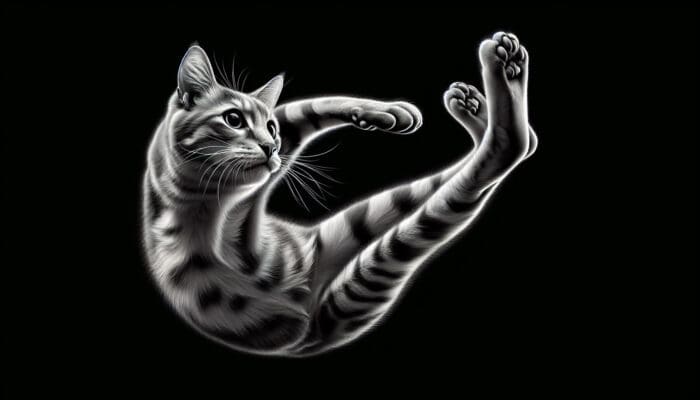
Cats exhibit an extraordinary reflex known as the righting reflex, a remarkable ability that allows them to orient their bodies in mid-air and consistently land on their feet after a fall. This intricate reflex mechanism merges advanced neurological coordination, exquisite balance, and exceptional physical agility. When a cat experiences a fall, it instinctively engages in a series of coordinated movements, enabling it to twist its body and prepare for a secure landing. The critical stages involved in the righting reflex process encompass:
- Initial body orientation: The cat employs its inner ear to detect the position of the ground.
- Head rotation: The cat rapidly turns its head to face downwards.
- Body alignment: The spine flexes, facilitating a twist that aligns the body with the landing surface.
- Leg extension: The cat extends its legs downwards in anticipation of impact.
- Paw positioning: The paws adjust to efficiently cushion the impact upon landing.
- Impact absorption: The cat lands on its feet, taking advantage of the flexible structure of its legs and paws to soften the fall.
This intricate series of actions occurs within mere seconds, showcasing not only the agility of cats but also their evolved instincts for survival. Every component of the righting reflex is precisely tuned, allowing cats to respond swiftly to various falling situations, whether in familiar indoor settings or unpredictable outdoor environments.
What Scientific Principles Underpin Cats' Aerial Maneuvers?
The physics governing the aerial maneuvers of cats are firmly rooted in principles such as angular momentum and the conservation of energy. As a cat begins its descent, it skillfully utilises its body mass and its ability to rotate around its centre of mass to adjust its position effectively. By manipulating these critical parameters, cats can control their rotation speed and trajectory while in free fall, providing them with remarkable aerial adaptability.
For instance, as a cat initiates its fall, it instinctively tucks its front legs close to its body, thereby reducing its moment of inertia and allowing for a quicker spin. Conversely, when it extends its legs, it increases inertia, resulting in a slower rotation. This astonishing capability to modulate body position and speed leads to a seamless transition from free fall to a stable landing posture, highlighting the sophistication of feline physiology.
Moreover, the principle of energy conservation plays a vital role in how cats safely land. During their descent, cats convert potential energy derived from their height into kinetic energy. Their unique anatomical features, such as flexible spines and padded paws, enable them to absorb this energy upon landing without suffering severe injuries. The interplay of these physical laws, combined with feline anatomy, illustrates how cats have adapted to their environments, allowing them to navigate heights with remarkable finesse and safety.
How Do Kittens Develop the Righting Reflex Over Time?
Kittens are not born with the righting reflex; it develops progressively, typically becoming evident around three to four weeks of age. This crucial developmental milestone equips kittens with essential survival skills. Initially, the reflex may be underdeveloped, leading young kittens to struggle with safe landings. However, as they mature, their neurological systems and muscle coordination significantly improve, enhancing their ability to execute the righting reflex effectively.
The maturation of their neurological systems is crucial for this developmental transition. As kittens grow, their sensory systems become more integrated, enabling them to accurately interpret information about their surroundings. This maturation is complemented by physical growth, as kittens develop stronger muscles and increased flexibility in their spines. By approximately eight weeks of age, most kittens can proficiently perform the righting reflex, showcasing impressive evolutionary adaptations.
Additionally, environmental factors significantly influence the development of this reflex. Kittens exposed to diverse terrains and heights are more likely to refine their righting abilities through practical experiences. This experiential learning not only enhances their reflexes but also fosters confidence, making them more adept at navigating their surroundings as they transition into adulthood.
Discover Expert Insights on Cats' Exceptional Ability to Land on Their Feet

What Do Scientific Studies Reveal About the Feline Righting Reflex?
Extensive research into the feline righting reflex has unveiled crucial insights into the biomechanics and neurology underpinning this remarkable ability. Studies indicate that cats can right themselves from various heights and positions, showcasing an impressive adaptability that is both instinctual and learned, which is vital for their survival.
Real-world examples further illustrate this captivating phenomenon. For instance, a notable study documented a cat that fell from a considerable height—approximately seven stories—successfully landing on its feet. Remarkably, despite the fall, the cat only sustained minor injuries, underscoring the efficiency of the righting reflex. Similarly, other studies have observed cats navigating narrow ledges or balconies, where their ability to assess their environment and adjust rapidly was crucial for maintaining balance and ensuring successful landings.
These studies not only underscore the extraordinary physical capabilities of felines but also enhance our understanding of their neural pathways. Researchers have identified specific neurons activated during the righting reflex, coordinating muscle movements and spatial awareness. This research enriches our comprehension of feline behaviour and highlights the evolutionary advantages conferred by such adaptations.
How Do Veterinarians Assess the Righting Reflex in Cats?
Veterinarians frequently address the righting reflex within the context of feline health and safety. They recognise that while cats possess an impressive aptitude for landing on their feet, this does not guarantee they will remain unscathed after a fall. Many veterinarians stress that notwithstanding the righting reflex, cats can still incur injuries, particularly when falling from significant heights or if they are older or physically compromised.
Veterinarians often encounter cases of cats that have fallen and suffered serious injuries, such as fractures or internal trauma. Therefore, the righting reflex should not be misconstrued as an infallible safeguard against injury. The belief that cats are invulnerable due to their ability to land on their feet can foster a dangerous sense of security among pet owners, potentially leading to preventable accidents.
Moreover, veterinarians emphasise that environmental factors significantly influence the safety of a cat's landing. For instance, landing on hard surfaces versus softer terrains can dramatically impact the outcome of a fall. Consequently, many veterinarians advocate for safety measures to prevent falls, particularly in homes with high windows or balconies, to ensure that cats remain safe and healthy.
What Insights Can We Gain from Observing Cats' Behaviour?

Observing cats can yield valuable insights into their agility, reflexes, and survival instincts, expanding our understanding of animal behaviour as a whole. Cats exemplify a multitude of physical capabilities that illustrate the intricacies of coordination and balance. Their ability to leap, twist, and land on their feet serves as a reminder of the critical role agility plays in survival.
These observations can inform research across various fields, including robotics and biomechanics. Engineers frequently study cats' movements to develop robots capable of navigating complex environments and recovering from falls. By mimicking the righting reflex, engineers aim to create machines endowed with similar adaptive capacities, emphasising the broader significance of understanding feline behaviour.
Moreover, the agility and reflexes displayed by cats can inspire safety measures for humans. For instance, the principles underpinning a cat's righting reflex can inform training for athletes or individuals in professions that require high levels of physical coordination. By examining how cats manage their falls, humans can devise better strategies for maintaining balance and preventing injuries during physical activities.
Dispelling Myths: The Truth About Cats Landing on Their Feet
Is It a Fact That Cats Always Land on Their Feet?
The notion that cats always land on their feet is a prevalent myth. While cats demonstrate a high success rate for landing correctly, it is crucial to acknowledge that this is not an absolute guarantee. Several factors can significantly influence landing outcomes, including the height of the fall, the health condition of the cat, and environmental circumstances.
Research indicates that although cats can successfully right themselves from various heights, their success rate diminishes with increased elevation. For example, falls from lower heights typically yield a higher success rate, while falls from considerable heights can result in severe injuries or even fatalities. Furthermore, older cats or those with pre-existing health conditions may lack the agility and reflexes necessary to execute the righting reflex effectively.
Understanding the limitations of the righting reflex is essential for cat owners to ensure their pets' safety. While cats are equipped with remarkable abilities, they are not invincible. Fostering a safe environment that mitigates the risk of falls is imperative for preserving feline health and well-being.
How Does the Environment Influence a Cat's Landing Capabilities?
The environment plays a pivotal role in a cat's ability to land safely. Various factors can influence the success of a cat's landing, including the type of surface they land on, the presence of obstacles, and the cat's familiarity with the area. For instance, a soft grassy surface cushions the impact far more effectively than a hard concrete surface, showcasing the importance of terrain in fall outcomes.
Cats also demonstrate a greater aptitude for landing safely in environments they know well. Familiarity with their surroundings allows them to gauge distances and make necessary adjustments during a fall. Conversely, cats may struggle to navigate unfamiliar terrains, leading to heightened risk during falls.
Moreover, environmental hazards such as furniture, ledges, or other obstacles can complicate a cat's landing. If a cat misjudges a leap or fall, these hazards can result in injuries. Therefore, creating a safe and familiar environment for cats, particularly in homes with balconies or high windows, is vital for preventing dangerous falls and ensuring their safety.
What Risks Are Associated with High Falls for Cats?
High falls present significant risks for cats, potentially resulting in a range of injuries such as broken bones, internal trauma, and, in severe cases, death. Although cats possess the ability to right themselves, the height from which they fall directly correlates with the severity of possible injuries.
Studies have demonstrated that cats falling from heights greater than two stories can sustain serious injuries despite their capacity to land on their feet. The impact force increases with height, and while their righting reflex may assist in landing, it does not eliminate the risk of injury entirely.
Furthermore, the nature of the surface they land on greatly influences the outcome. Landing on a hard surface can lead to more severe injuries compared to landing on a softer surface. Cats can suffer injuries such as fractured limbs or punctured lungs, underscoring the importance of managing high places within a cat's environment safely to mitigate potential hazards.
Consequently, it becomes essential for cat owners to implement safety measures to protect against high falls. By securing windows and balconies, providing stable climbing structures, and supervising outdoor activities, owners can significantly reduce the risks associated with potential falls.
How Do Age and Health Impact a Cat's Landing Ability?
A cat's age and overall health significantly influence its ability to land safely after a fall. As cats age, they may experience a decline in muscle tone, flexibility, and reflexes, which can hinder their righting reflex. Older cats may find it increasingly challenging to perform the necessary movements to land on their feet effectively, making them more susceptible to injuries during falls.
Additionally, health issues such as arthritis, obesity, or neurological disorders can further compromise a cat's ability to execute the righting reflex. These conditions can hinder muscle coordination and reduce overall agility, making it progressively difficult for cats to adjust their bodies during a fall.
Moreover, while younger cats are generally more agile, they may lack the experience required to navigate falls effectively. Kittens still developing their righting reflex may not land as securely as adult cats, emphasising the importance of supervising their activities and providing safe environments.
Ultimately, understanding how age and health affect a cat's landing ability enables owners to take proactive measures to safeguard their pets. Regular veterinary check-ups and creating accessible environments can help mitigate risks associated with falls, particularly for older or unhealthy cats.
Can Training Significantly Improve a Cat's Landing Skills?
Training and experience can indeed enhance a cat's landing abilities. While the righting reflex is an innate skill, participating in activities that promote balance and agility can refine their reflexes and body control. Cats that regularly engage in climbing or jumping exercises are more likely to develop stronger coordination and refined landing skills.
Training can involve various exercises that stimulate a cat's natural instincts. For example, owners can create structured play sessions that include jumping onto safe surfaces or navigating climbing structures. Over time, this conditioning can boost a cat's confidence and skill set when it comes to landing effectively.
Incorporating interactive toys and climbing trees into a cat's environment can also encourage physical activity. Cats that navigate diverse terrains and heights gain a better understanding of their body mechanics, which can enhance their landing skills. Consistent practice enables them to refine their reflexes, leading to improved outcomes during falls.
Additionally, monitoring a cat's health and ensuring they maintain physical fitness can further enhance their landing capabilities. A well-balanced diet and regular exercise contribute to muscle development and overall agility, improving a cat's ability to perform the righting reflex effectively.
Understanding the Anatomy and Physiology Supporting Cats' Landing Ability
How Does a Cat's Spine Contribute to Its Exceptional Landing Skills?
The spine of a cat plays an integral role in its ability to land on its feet after a fall. Cats possess a uniquely flexible spinal column that allows for extensive rotation and bending during mid-air manoeuvres. This flexibility is essential for the righting reflex, enabling cats to twist their bodies and align themselves correctly for landing, a critical factor in their survival.
The intervertebral discs within a cat's spine provide cushioning and flexibility, allowing the spine to bend and twist without injury. This anatomical feature facilitates quick adjustments in body position as the cat descends. The elasticity of the spine also aids in absorbing impact upon landing, significantly reducing the risk of injury, showcasing the evolutionary benefits of this anatomical structure.
Moreover, the structure of a cat's spine allows it to maintain a low centre of gravity, which is vital for balance. When preparing to land, a cat's flexible spine assists in distributing weight evenly across its legs, providing stability and support. This anatomical adaptation is a key factor in a cat's ability to execute the righting reflex effectively, highlighting the importance of evolutionary design in feline agility.
Overall, the design of the spinal column illustrates the evolutionary adaptations that enhance a cat's agility, allowing them to navigate their environments with exceptional skill and safety.
What Role Do Muscles Play in Cats' Exceptional Landing Abilities?
The muscles in a cat's body, particularly those in the back and abdomen, are essential for their ability to land on their feet. These muscle groups provide the strength and power necessary for executing the rapid movements required during the righting reflex. The agility of these muscles enables cats to twist and turn mid-air effectively, making them adept at landing safely.
When preparing to land, a cat's back and abdominal muscles contract, allowing for swift adjustments in body position. This contraction is crucial for maintaining stability and control throughout the fall, enabling the cat to orient itself correctly. The strength of these muscles is critical for absorbing landing impacts, as they help cushion the effects and prevent injuries during falls.
Additionally, the coordination between muscle groups is vital for the smooth execution of the righting reflex. Cats rely on a combination of muscle strength and flexibility to navigate falls successfully. Regular physical activity, such as climbing or jumping, can bolster these muscle groups, enhancing a cat's overall landing ability and agility.
Furthermore, providing an environment that encourages exercise and activity contributes to maintaining muscle health. Ensuring that cats engage in play and exploration promotes the muscle strength necessary for executing their remarkable landing skills, highlighting the importance of an active lifestyle in feline well-being.
How Does a Cat's Tail Assist in Their Ability to Land Gracefully?
A cat’s tail serves as a critical counterbalance during the righting process, playing an essential role in maintaining stability and control while in mid-air. The tail's flexibility allows cats to adjust their body position effectively, aiding in aligning themselves with the ground before landing safely.
When a cat jumps or falls, it instinctively uses its tail to shift its weight and counterbalance its body movements. This dynamic adjustment enhances the cat's ability to rotate and land securely on its feet. The tail acts as a rudder, guiding the cat's orientation and ensuring a stable landing posture, which is crucial for minimizing injury risks.
Moreover, the tail's role extends beyond balance; it also assists in fine-tuning a cat's movements. As a cat twists and turns in the air, the tail helps regulate the speed of rotation, allowing for precise adjustments. This capability is vital for ensuring that the cat can land safely, especially when navigating complex environments, showcasing the tail's importance in the evolutionary design of feline agility.
The evolutionary significance of a cat's tail in facilitating landings underscores the importance of this anatomical feature. It not only contributes to the overall agility and balance of the cat but also enhances its ability to adapt to various jumping and falling scenarios, ensuring a higher likelihood of safe landings.
How Do Cats' Inner Ears Aid in Their Exceptional Landing Skills?
Cats' inner ears play a vital role in detecting changes in orientation, which is essential for triggering the righting reflex. The vestibular system within the inner ear contains fluid-filled structures that help cats maintain balance and spatial awareness. This sensory input is crucial for making the rapid adjustments required during a fall, showcasing the importance of sensory perception in feline agility.
When a cat begins to fall, the fluid in the inner ear shifts, signalling changes in position. This information is relayed to the cat's brain, prompting immediate action to orient the body correctly. The timing and precision of this reflex are vital, as they determine how quickly the cat can realign itself for landing, underscoring the intricate relationship between anatomy and behaviour.
Furthermore, the coordination between the inner ear and other sensory systems, such as vision and proprioception, enhances a cat's ability to gauge its environment accurately. Cats are known for their keen awareness of their surroundings, allowing them to assess distances and plan their movements effectively. This integrated sensory feedback is crucial for successfully executing the righting reflex, highlighting the multifaceted nature of feline agility.
The evolutionary adaptation of a cat's inner ear structure emphasises the significance of sensory faculties in survival. By refining their ability to detect orientation changes, cats have developed remarkable skills that contribute to their agility, making them adept at navigating their environments and minimising injuries during falls.
What Impact Do Cats' Paws Have on Their Landing Skills?
Cats' paws are designed with specialised structures that significantly contribute to their ability to land safely. The pads on a cat's paws provide essential cushioning that helps absorb the impact of landing. This anatomical feature reduces the risk of injury and allows cats to execute the righting reflex more effectively, demonstrating the evolutionary advantages of their paw structure.
When a cat lands, the soft pads of its paws compress to absorb shock, distributing the force evenly throughout the leg structure. This capability is crucial for minimising damage to bones and joints during impact. Additionally, the padding provides grip, enabling cats to maintain stability on various surfaces, which is vital for both agility and safety.
Moreover, the structure of a cat's paws allows for flexibility and agility. The toes can splay out upon landing, enhancing grip and balance even further. This adaptability is particularly important when landing on uneven or unstable surfaces, such as branches or rocky terrain, showcasing the intricate design of feline anatomy.
Furthermore, the design of a cat's paws contributes to its overall mobility and agility. Cats possess retractable claws that help them grip surfaces while climbing or landing. This unique feature ensures that their paws can perform optimally, greatly enhancing their ability to execute the righting reflex successfully and navigate their environments with confidence.
The evolutionary advantages of this paw structure underscore the intricate relationship between anatomy and behaviour. By equipping cats with specialised paws, nature has provided them with the tools necessary for navigating their environments with finesse and confidence, reinforcing their adaptability.
The Evolutionary Benefits of Cats Landing on Their Feet
How Has the Righting Reflex Evolved in Cats Over Time?
The righting reflex in cats has evolved as a vital survival mechanism, enabling them to navigate their environments with an impressive degree of agility and safety. This reflex likely developed to assist feline ancestors in escaping predators and successfully hunting prey from elevated perches, illustrating its importance in feline evolution.
As cats adapted to their environments, the righting reflex became increasingly refined through natural selection. Cats capable of effectively righting themselves during falls had a higher likelihood of survival, thus passing on this advantageous trait to future generations. The ability to land on their feet not only helps them evade threats but also allows them to escape hazardous situations swiftly, underscoring the significance of this reflex in their survival.
This evolutionary development has shaped the unique anatomical features of felines, such as their flexible spines and specialised muscle structures. These adaptations are crucial for executing the righting reflex successfully, illustrating how physiological traits have been honed over time to enhance survival capabilities in diverse environments.
In a broader ecological context, the righting reflex serves as a critical adaptation for various feline species, whether in urban environments or wild habitats. The ability to traverse diverse terrains and heights effectively has allowed cats to occupy a wide range of ecological niches, promoting their success as both predators and prey in the animal kingdom.
What Are the Survival Benefits of Landing on Their Feet for Cats?
Landing on their feet provides cats with significant survival advantages that enhance their ability to navigate various environments effectively. One primary benefit is the capacity to recover swiftly from falls, allowing cats to continue hunting or escaping threats without significant interruption. This agility is essential for both survival and social interactions among felines.
When cats land on their feet, they can quickly assess their surroundings and resume normal activities, which is crucial for maintaining a strong presence in their territories, engaging in mating behaviours, and avoiding potential predators. This ability to recover swiftly contributes to their overall adaptability and resilience in unpredictable environments.
Additionally, landing on their feet minimises the risk of severe injuries, which can be critical in the wild, where injuries can hinder a cat’s ability to hunt and survive. Cats that can effectively land on their feet are less likely to face long-term consequences from falls, ensuring they remain active and capable hunters, reinforcing their status within their ecological niches.
The evolutionary significance of this advantage is evident in the distribution of feline species across various habitats. Whether climbing trees to escape predators or navigating urban landscapes, the ability to land safely enables cats to thrive in diverse environments, reinforcing their role as adaptable and resilient animals in the wild.
How Does the Righting Reflex Compare to Other Animals?
While many animals possess reflexes to assist in falling, the feline righting reflex stands out due to its effectiveness and adaptability. Compared to other species, cats exhibit a unique combination of speed, precision, and physiological adaptation that enhances their ability to land safely and recover from falls.
For instance, other mammals, such as dogs, may not have the same flexibility in their spine or the same degree of muscle coordination as cats, which limits their ability to right themselves mid-air. Birds, while also skilled at aerial maneuvers, rely on flight rather than the righting reflex, showcasing a different evolutionary adaptation that serves their survival needs.
The righting reflex in cats has been extensively studied, highlighting its effectiveness in various scenarios. Research indicates that cats can successfully right themselves from impressive heights, outperforming many other land-dwelling species. This ability is a testament to the evolutionary pressures that shaped feline anatomy and behaviour, underscoring the significance of this reflex in their survival.
Furthermore, observing the feline righting reflex can inform studies of biomechanics in other animals, leading to advancements in fields such as robotics and medicine. By understanding the unique adaptations that enable cats to land safely, researchers can develop technologies that mimic these capabilities for applications across diverse sectors, showcasing the broader implications of studying feline agility.
How Does the Righting Reflex Influence Cat Behaviour and Confidence?
The righting reflex significantly influences cat behaviour, boosting their confidence in climbing and exploring their surroundings. This reflex instills a sense of security in cats, encouraging them to take risks and navigate heights that might intimidate other animals, fostering their natural curiosity.
Consequently, this confidence impacts their play behaviour, as cats frequently engage in activities involving jumping, climbing, and exploring vertical spaces. The righting reflex cultivates a natural inclination to test boundaries, which contributes to their playful and curious nature.
This behaviour is particularly advantageous in the wild, where climbing and leaping skills can aid in hunting and escaping predators. By developing confidence through practice, cats enhance their physical capabilities and refine their sensory awareness, which is vital for survival in dynamic environments.
Moreover, the righting reflex affects social interactions among cats. Confident cats may establish dominance within their territory by demonstrating agility and prowess, influencing social hierarchies in multi-cat households. Understanding how the righting reflex shapes behaviour can assist pet owners in fostering environments that promote healthy exploration and physical activity among their feline companions.
Research-Backed Benefits of Cats Always Landing on Their Feet
What Do Studies Indicate About Cats' Success Rate in Landing on Their Feet?
Research suggests that cats have an exceptionally high success rate of landing on their feet, with studies reporting rates of approximately 90% or higher. This data underscores the effectiveness of the righting reflex and the anatomical adaptations that facilitate successful landings, highlighting the evolutionary benefits of this remarkable ability.
The implications of this high success rate are vital for cat owners, as they highlight the need for proactive safety measures to protect cats from falls. Creating environments that minimise risks while encouraging safe exploration can significantly enhance a cat's quality of life while reducing the chances of injury.
To ensure their pets' safety during falls, cat owners can take several actionable steps:
- Secure windows and balconies to prevent access to high places.
- Provide stable climbing structures that allow for safe exploration.
- Supervise outdoor activities to prevent falls from heights.
- Educate themselves about their cat's environment and potential hazards.
By implementing these safety measures, owners can significantly reduce the risks associated with feline falls, even considering the remarkable righting reflex that aids in their survival.
How Does the Righting Reflex Impact Feline Health?
The righting reflex can profoundly affect feline health. By minimising the severity of injuries sustained from falls, this reflex serves as a protective mechanism that enhances overall well-being. Cats that can effectively right themselves often experience a lower incidence of severe injuries, contributing to a longer and healthier life, which is vital for their longevity and quality of life.
However, while the righting reflex is impressive, it is not infallible. Cats can still sustain injuries from falls, particularly when they fall from significant heights or land on hard surfaces. Understanding the limitations of the righting reflex is crucial for cat owners in managing their pets' health and ensuring their safety.
Moreover, regular veterinary check-ups play a vital role in monitoring feline health, especially for older cats or those with pre-existing conditions. By ensuring that cats remain physically fit and agile, owners can support their pets in maintaining their natural abilities, including the righting reflex, fostering a proactive approach to feline health.
Overall, promoting a safe environment and ensuring regular health assessments contribute significantly to feline health outcomes, allowing cats to thrive while minimising injury risks associated with falls.
What Are the Long-Term Effects of Frequent Falls on Cats?
Frequent falls can have long-term effects on cats, including chronic pain, joint issues, and diminished quality of life. While cats possess the righting reflex, repeated falls can lead to cumulative injuries that may not be immediately apparent, affecting their overall well-being.
Chronic pain can develop from injuries sustained during falls, impacting a cat's mobility and overall demeanor. Additionally, conditions such as arthritis can arise due to the stress placed on joints from repeated impacts, leading to long-term health issues that require management and attention from pet owners.
Understanding these effects is crucial for cat owners in monitoring their pets' health. Awareness of changes in behaviour, mobility, or activity levels can indicate underlying issues resulting from falls. Prompt veterinary intervention is essential in addressing any concerns and implementing preventative measures to safeguard feline well-being.
Moreover, creating a safe environment that minimises the risk of falls can enhance a cat's quality of life. By providing stable surfaces and encouraging safe exploration, owners contribute to their pets' physical health and overall happiness, reducing the likelihood of falls in the first place.
Training and Conditioning to Enhance Cats' Landing Abilities
Can Training Improve Cats' Landing Skills?
While cats inherently develop the righting reflex, training can enhance their landing skills. Engaging in activities that promote agility and coordination can help cats refine their abilities, allowing them to execute the righting reflex more effectively and with greater confidence.
Training techniques can encompass structured play sessions or exercises that simulate climbing and jumping. By encouraging cats to explore safe surfaces and heights, owners can nurture confidence and physical capability, enabling them to manage falls more adeptly in various situations.
Additionally, using positive reinforcement during training can motivate cats to participate actively. By rewarding them for engaging in exercises that promote agility, owners can create a positive association with physical activity, further enhancing their cats' landing skills and overall physical fitness.
Overall, while the righting reflex is a natural ability, purposeful training can amplify a cat's innate capabilities, improving their confidence and physical performance during falls, which can ultimately enhance their quality of life.
What Are Effective Conditioning Techniques for Cats?
Effective conditioning techniques for cats include play activities that encourage jumping, climbing, and exploration. These exercises strengthen muscles and improve coordination and confidence, which are crucial for executing the righting reflex successfully and ensuring safe landings.
Some conditioning exercises include:
- Interactive toys that promote jumping and pouncing.
- Climbing structures or trees that encourage vertical exploration.
- Obstacle courses that require agility and precision.
- Play sessions with feathers or toys that simulate prey movement.
By incorporating these activities into a cat's routine, owners can stimulate physical fitness while promoting a healthy lifestyle. Regular engagement in these exercises will help maintain muscle strength, flexibility, and overall health, contributing to improved landing abilities and overall agility.
Moreover, varying these activities can keep cats mentally stimulated and engaged. The combination of physical and cognitive challenges fosters a well-rounded approach to feline health, ensuring that cats remain active and agile as they grow older.
How Can Cat Owners Support Their Pets' Landing Abilities?
Cat owners play a critical role in supporting their pets' landing abilities by creating a safe and stimulating environment. Providing opportunities for physical activity is essential for maintaining a cat's agility and overall health, ensuring that they can navigate their surroundings safely.
One effective way to support landing abilities is by setting up climbing structures and play areas where cats can explore safely. These environments encourage natural behaviours while allowing cats to practice their jumping and landing skills, reinforcing their innate capabilities.
Additionally, engaging in regular playtime helps strengthen muscles and refine coordination. Interactive toys and activities that require jumping or climbing can enhance a cat’s physical capabilities, making them more adept at managing falls and navigating their environments effectively.
Furthermore, owners should monitor their cat’s health and ensure they receive regular veterinary care. Addressing any underlying health issues can significantly impact a cat’s ability to execute the righting reflex effectively. Overall, a proactive approach to promoting safety and activity can cultivate an environment that supports a cat’s natural landing abilities.
How Can Diet and Nutrition Improve a Cat's Landing Skills?
A well-balanced diet greatly impacts a cat's landing skills, as it supports muscle development and overall health. Proper nutrition is vital for maintaining the physical strength and agility necessary for executing the righting reflex effectively, contributing to a cat's overall fitness and well-being.
Key nutrients include:
- Proteins that build and repair muscle tissue.
- Vitamins that support overall health and metabolic function.
- Minerals such as calcium and phosphorus that strengthen bones.
- Healthy fats that provide energy for physical activities.
By ensuring that cats receive a nutritionally balanced diet, owners can promote optimal health and enhance their pets' physical capabilities. A strong muscular structure allows cats to execute quick movements needed for landing, while robust bones help protect against injuries during falls, reinforcing the importance of proper nutrition in feline health.
Moreover, understanding a cat's specific dietary requirements based on age, size, and activity level is essential in shaping a feeding plan. Consultation with a veterinarian can provide valuable insight into the best dietary practices to support a cat's agility and overall well-being, ensuring they remain healthy and active throughout their lives.
The Psychological Impact of Falling on Cats
How Do Cats React Psychologically to Falls?
Cats can experience psychological stress from falls, which may manifest as anxiety or behavioural changes. Experiencing a fall can be disorienting and frightening for a cat, potentially leading to long-term effects on their mental well-being and behaviour patterns.
When a cat falls, it may develop a fear of heights or a reluctance to engage in activities involving climbing or jumping. This fear response can hinder their natural exploration and play, negatively impacting their quality of life and ability to thrive in their environment.
Moreover, the psychological impact can vary depending on the individual cat’s temperament and past experiences. Some cats may bounce back quickly, while others may become more cautious, affecting their confidence in navigating their environment and impacting their overall behaviour.
Understanding these reactions is crucial for providing the right support. By recognising signs of anxiety or stress, cat owners can take proactive steps to help their pets recover and regain confidence, ensuring a stable emotional environment that promotes healing and well-being.
What Are the Signs of Psychological Distress in Cats After Falls?
Signs of psychological distress in cats after falls may include behavioural changes, such as hiding, reduced appetite, or increased vocalisation. Cats that are anxious or stressed may withdraw from their usual activities or become more reclusive, impacting their overall well-being and social interactions.
Other behavioural changes may involve aggression or heightened sensitivity to stimuli. A cat that once enjoyed play may become disinterested or avoid interactions altogether. Early recognition of these signs is essential for addressing potential issues and providing appropriate support to facilitate recovery.
Additionally, physiological signs such as excessive grooming, changes in litter box habits, or alterations in sleeping patterns can indicate distress. Monitoring these behaviours closely allows cat owners to intervene promptly and seek veterinary advice if necessary, ensuring that their pets receive the care they need.
Creating a calm and supportive environment is crucial for helping cats recover from the psychological effects of falling. Providing comfort and maintaining routines can help alleviate stress and encourage normal behaviour to return, fostering a sense of safety and security for the cat.
How Can Owners Help Cats Recover Psychologically from Falls?
Owners can assist cats in recovering psychologically from falls by creating a calm and supportive environment. Providing comfort during this time is essential, as it allows cats to feel secure while they process the experience and regain their confidence.
Maintaining routines, such as regular feeding and playtime, can also aid in recovery. Consistent schedules provide a sense of normalcy and stability, helping cats feel more secure in their surroundings and encouraging them to re-engage with their environment.
Additionally, engaging in gentle play and positive reinforcement can encourage cats to explore their surroundings again. Gradually reintroducing activities that involve climbing or jumping can help restore their confidence and promote positive associations with these actions, facilitating their emotional recovery.
Monitoring behaviour closely during this recovery period is critical. If signs of distress persist, seeking guidance from a veterinarian or animal behaviourist can provide valuable insights and recommendations for further support. By fostering a safe and encouraging environment, cat owners can assist their pets in overcoming the psychological impacts of falls, ensuring their long-term emotional well-being.
Essential Safety Measures to Prevent Falls in Cats
What Safety Measures Should Cat Owners Implement to Protect Their Cats?
There are several essential safety measures that cat owners should implement to protect their pets from falls. These precautions can significantly reduce the risk of injuries associated with high falls, ensuring a safer environment for feline companions and promoting their overall well-being.
First, securing windows and balconies is crucial. Installing screens or barriers can prevent cats from accessing high places where they may be tempted to jump or explore, reducing the likelihood of falls and associated injuries.
Additionally, utilising safety nets can provide an extra layer of protection for outdoor spaces. These nets can catch cats in the event of a misstep, reducing the likelihood of serious injuries and ensuring their safety during outdoor exploration.
Supervising cats during outdoor activities is also paramount. Keeping a watchful eye enables owners to intervene if a cat approaches a dangerous area or exhibits risky behaviour, thereby preventing potential accidents.
Finally, educating oneself about a cat's environment and potential hazards is essential. Understanding where cats are most likely to fall and implementing appropriate preventative measures can enhance overall safety, allowing for a more secure living space for feline companions.
By implementing these safety measures, cat owners can create a secure environment that minimises the risk of falls and promotes the well-being of their pets, ensuring a healthier and happier life for their feline friends.
How Can Indoor Environments Be Made Safer for Cats?
Indoor environments can be made safer for cats by removing hazards and providing stable climbing structures. Ensuring that cats can navigate their homes safely is vital for preventing falls and injuries, contributing to their overall health and happiness.
Some strategies for enhancing indoor safety include:
- Removing sharp objects or furniture that may pose a risk during falls or accidents.
- Providing stable and secure climbing structures that encourage safe exploration and play.
- Ensuring that high surfaces, such as shelves or cabinets, are secure and stable to prevent accidents.
- Using non-slip mats on surfaces where cats frequently walk or jump to improve traction and stability.
By implementing these strategies, owners can create an environment that allows cats to explore safely while minimising the risk of falls and injuries, enhancing their overall quality of life.
Additionally, providing enrichment through safe toys and interactive activities can keep cats engaged, reducing the likelihood of risky behaviours that may lead to falls. The combination of a safe environment and stimulating activities promotes a healthy lifestyle for cats, ensuring their physical and mental well-being.
Overall, fostering a safe and stimulating indoor environment is crucial for maintaining feline health and preventing accidents associated with falls, ensuring that cats lead happy and fulfilling lives.
What Should Cat Owners Do If Their Cat Falls?
If a cat falls, owners should take immediate action to assess the situation. First, it is crucial to check the cat for any visible injuries or signs of distress. If the cat appears injured or in pain, seeking veterinary care as soon as possible is essential to ensure their health and well-being.
Creating a calm and comforting environment for the cat after a fall is also important. Providing reassurance and avoiding sudden movements can help alleviate stress and anxiety, fostering a sense of safety for the cat during this time.
In cases where the cat seems fine, owners should still monitor for any changes in behaviour or mobility. Sometimes, injuries may not be immediately apparent, and observing for signs such as limping, changes in appetite, or reluctance to engage in normal activities is necessary to ensure their well-being.
Ultimately, being proactive in addressing potential injuries and providing support during recovery is crucial for ensuring a cat’s health and well-being after a fall. Prompt veterinary assistance and a calm environment can significantly aid in their recovery process and help maintain their overall quality of life.
Frequently Asked Questions About Cats and Their Righting Reflex
Do all cats land on their feet?
Most cats have a high success rate of landing on their feet, but it’s not guaranteed. Factors such as height and overall health can affect this ability, highlighting the importance of understanding their limitations.
Can older cats still right themselves?
While older cats may still possess the righting reflex, their agility and reflexes may diminish, increasing the risk of injury during falls. It's essential for owners to be mindful of this decline as their cats age.
What is the righting reflex?
The righting reflex is a cat's ability to orient its body mid-air to land on its feet after a fall, a skill developed through evolutionary adaptations that enhance their survival capabilities.
How can I help my cat stay safe indoors?
To ensure safety, secure windows and balconies, remove hazards, and provide stable climbing structures for safe exploration, fostering a secure environment for your feline companion.
Are there any long-term effects of falls on cats?
Frequent falls can lead to chronic pain, joint issues, or a reduced quality of life, emphasising the importance of a safe environment to protect feline health and well-being.
Can I train my cat to improve its landing skills?
Yes, engaging in activities that promote agility and confidence can help improve a cat's landing skills and overall physical abilities, enhancing their ability to navigate their environment safely.
What should I do if my cat shows anxiety after a fall?
Support your cat by creating a calm environment, maintaining routines, and providing gentle play to help rebuild confidence and alleviate stress following an incident.
How can I tell if my cat is injured after a fall?
Signs of injury may include limping, vocalisation, reluctance to move, or changes in appetite. Consult a veterinarian if you notice these symptoms to ensure your cat receives appropriate care.
Can diet affect my cat’s agility?
Yes, a balanced diet supports muscle development and overall health, which is essential for maintaining agility and landing abilities, highlighting the relationship between nutrition and physical performance.
Is it true that cats can fall from any height without injury?
This is a myth; while cats have a righting reflex, falls from significant heights can lead to severe injuries despite their ability to land on their feet, underscoring the need for precaution.
Connect with us on Facebook!
The Article Cats Always Land on Feet: The Universal Phenomenon First Published On https://elgatoencasa.com
The Article Cats Always Land on Their Feet: A Universal Mystery Was Found On https://limitsofstrategy.com



I have to say, reading about the incredible physiology of cats brings back memories of my own feline companion, Whiskers. You know, I used to think that Whiskers had a secret life as a paratrooper. The first time I saw her leap from the top of the bookshelf—flipping mid-air with the grace of an Olympic gymnast—I thought I might need to borrow some of that catnip to muster up the courage for my own daring feats!