Encountering a power outage in a specific part of your home can be quite confusing. You might find, for instance, that while the kitchen is plunged into darkness, the television continues to function. This scenario is commonly experienced by residents in Bellingen, Coffs, Sawtell, and Nambucca. Fortunately, such disruptions in power are typically related to a singular circuit or a specific component of the switchboard malfunctioning, rather than a total power failure.
Key Insights: If only a particular area of your home is experiencing power loss, potential causes may include a tripped safety switch or circuit breaker, a malfunctioning appliance that has interrupted the circuit, or a loose or damaged connection within the switchboard. While you may be able to assess some of these issues independently, others necessitate the expertise of a qualified electrician. Issues within the switchboard or hidden faulty connections can pose significant fire risks if not addressed promptly.
Identifying the Reasons Behind Partial Power Loss in Your Home
Key Insights: Every home is designed with several individual circuits, each protected by its own switch located within the switchboard. A fault in one circuit can leave the others operational.
The switchboard plays a crucial role in distributing electrical power throughout your home: one circuit may power outlets, another may control lighting, while others manage appliances such as the oven, hot water system, and air conditioning. Each circuit operates under its own circuit breaker or safety switch. When a fault occurs within a specific circuit, only the switch for that circuit will trip. This explains why some areas of your home may still function normally while others do not. It is essential to identify the cause of the trip and assess the likelihood of it recurring.
Essential Safety Checks You Can Carry Out Yourself
Key Insights: You can visually inspect the switchboard and reset any tripped switches. It is safe to unplug appliances, but avoid opening the switchboard or interfering with its internal components.
- Inspect the switchboard for any switches that are turned OFF or only partially engaged. This often indicates a tripped circuit. Switch it fully OFF and then back ON.
- If it trips again immediately, keep it OFF. This suggests a fault in that circuit—repeated attempts to reset it are inadvisable.
- Unplug all appliances connected to the affected circuit before attempting to reset. Common culprits include faulty kettles, refrigerators, pool pumps, or power tools. If the switch remains on after disconnecting everything, reconnect appliances one at a time to isolate the faulty device.
- Check whether the issue is limited to a single power point. Some general power outlets (GPOs) have their own reset options; if only one outlet is non-functional, it may indicate a smaller, separate issue rather than a complete circuit failure.
These guidelines provide safe DIY troubleshooting practices. Opening the switchboard cover, tightening terminals, or examining wiring faults should be left to a licensed electrician, as the components inside remain live even when a switch is turned off.
Frequent Causes of Power Failure in Your Home
Key Insights: Common reasons for power loss in homes include malfunctioning appliances, moisture intrusion, ageing safety switches, or loose connections within the switchboard. In older or rural installations, pest-related issues can also contribute.
- A faulty appliance that leaks current can trip the safety switch, making it one of the most prevalent causes.
- Moisture can seep into outdoor power points, switchboards, or junctions in roof spaces, especially after heavy rain in the Mid North Coast.
- An old or malfunctioning safety switch (RCD) may become overly sensitive, tripping even when the circuit is functioning correctly.
- A loose or corroded connection within the switchboard can generate heat, lead to arcing, and ultimately cause the circuit to fail, posing a serious fire risk.
- Pest damage—especially in older or rural properties—can lead to issues such as ants nesting in the switchboard or rodents gnawing on cables, potentially short-circuiting the electrical supply. We offer a comprehensive guide detailing how pests contribute to electrical faults.
When Is It Necessary to Consult a Licensed Electrician?
Key Insights: If the switch fails to reset, trips repeatedly, emits a burning smell, or if you cannot pinpoint an appliance causing the issue, stop attempting to reset it and seek professional help.
- A switch that won’t stay reset or trips again shortly thereafter
- A burning or acrid odour near the switchboard or a power point
- Buzzing or crackling noises, or warmth radiating from the switchboard cover
- Power fluctuations occurring randomly without explanation
- The absence of a faulty appliance suggests potential issues within the wiring or the switchboard
Continuously resetting a switch that keeps tripping is unwise. The trip serves as a warning sign, and forcing the switch back on allows the underlying issue to persist and may worsen.
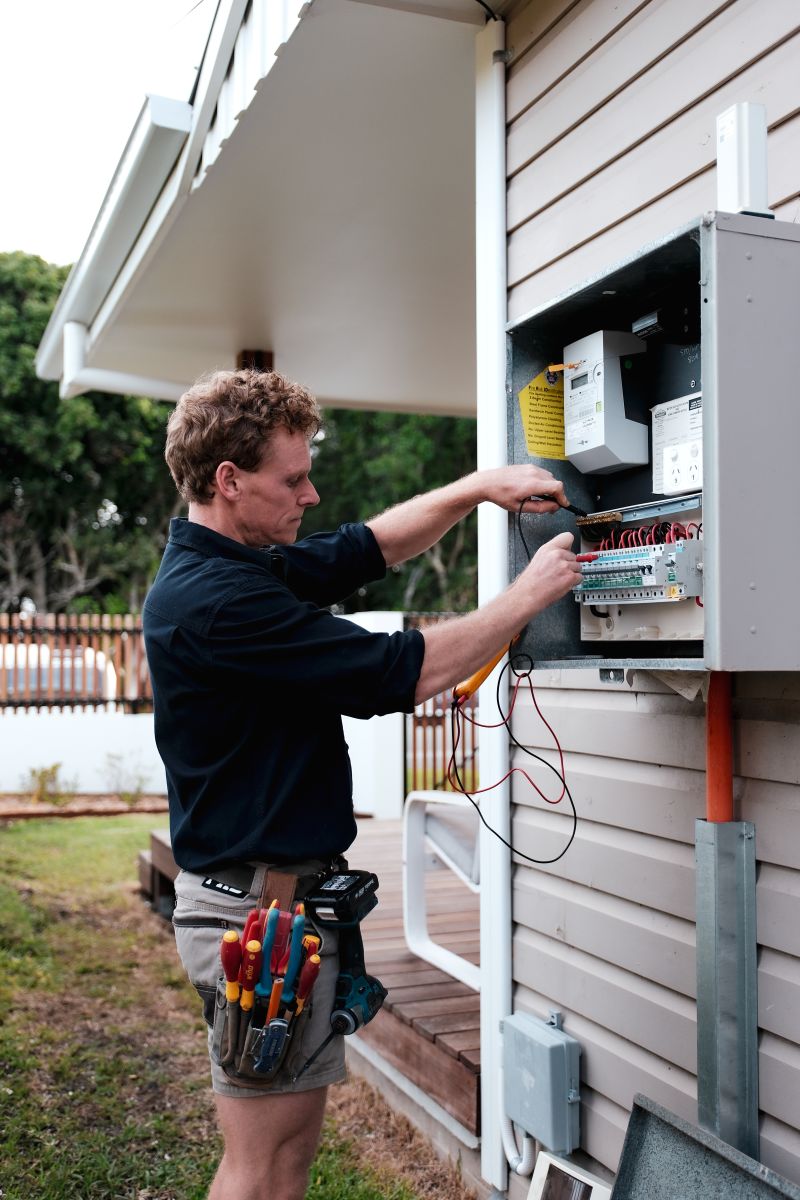
Our Comprehensive Method for Diagnosing and Resolving Power Issues
Key Insights: We isolate the power supply, meticulously test each circuit to accurately identify the issue, perform necessary repairs, and ensure the switchboard’s integrity—rather than merely resetting the switch.
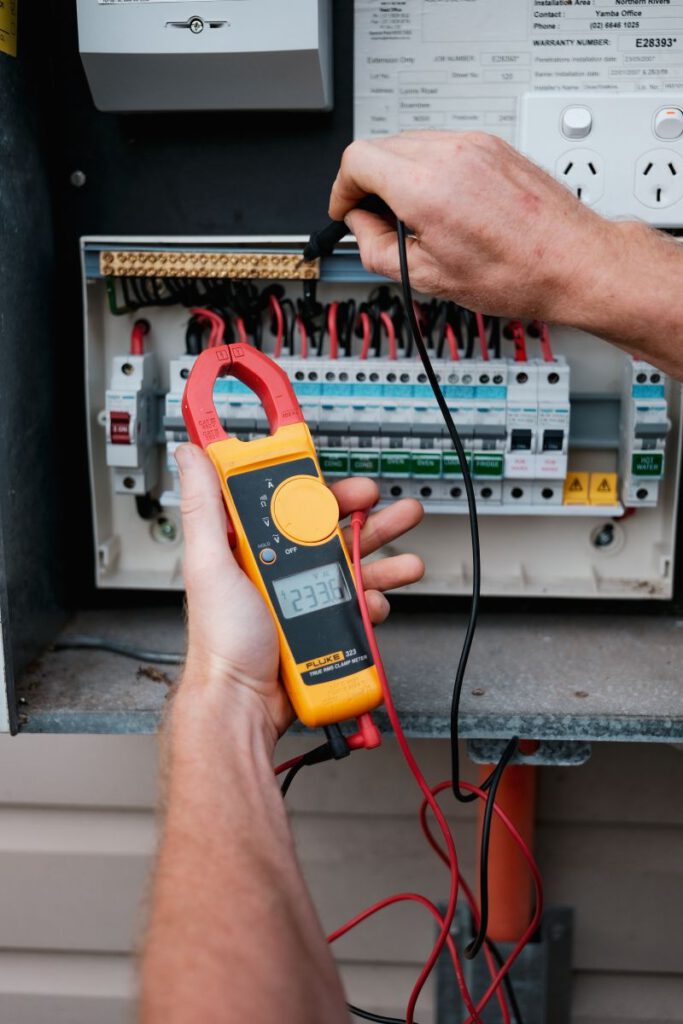
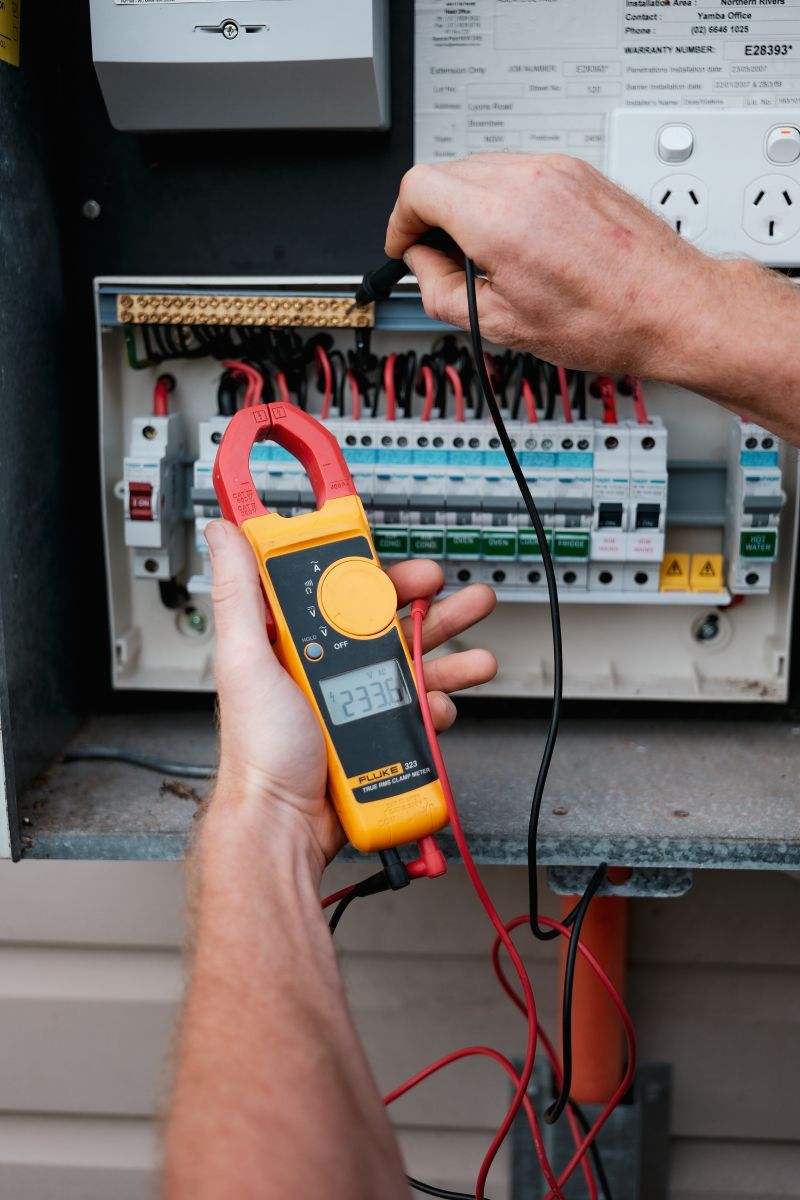
When we arrive at your location, we isolate the power supply and systematically test each circuit with specialized equipment to pinpoint the fault—whether it’s an appliance, damaged wiring, moisture, or a connection issue within the switchboard. Our goal is to address the actual fault, not just reset the switch. While on-site, we also evaluate the entire switchboard. If we determine that the switchboard is outdated, overcrowded, or if the safety switches have reached the end of their operational life, we will discuss upgrading the switchboard to prevent future complications. This is often necessary in older rural installations, which we frequently address as part of our rural switchboard upgrade service.
If certain areas of your home are consistently losing power in locations such as Bellingen, Dorrigo, Coffs, or Nambucca, it is crucial to accurately trace the issue before it escalates into an emergency situation. Schedule a fault-finding session and switchboard inspection with Damian, or contact us at 0402 079 803.
Frequently Asked Questions About Power Loss
Why Does Only Half of My House Lose Power While the Other Half Remains Functional?
Your home is wired into multiple circuits, each connected to its own switch in the switchboard. A fault in one circuit will only affect that specific switch, allowing the remainder of the house to stay powered. This situation generally indicates an issue with a faulty appliance, moisture, or a problem within the affected circuit or its safety switch—not a total power supply failure.
Is It Safe to Continue Resetting a Tripped Safety Switch?
No, it is unsafe. The switch trips as a protective mechanism, and repeatedly resetting it forces power back onto a circuit with an existing fault. If the switch does not remain reset or trips again shortly thereafter, keep it OFF and consult a licensed electrician. Forcing the switch can lead to overheating, arcing, and potential fire hazards.
Can One Appliance Cause My Entire Circuit to Fail?
Yes, this is a common situation. Faulty appliances such as kettles, refrigerators, pool pumps, heaters, or power tools can leak current to the ground, prompting the safety switch for that circuit to trip. Unplug all devices connected to the malfunctioning circuit, attempt a single reset, and then reconnect the appliances one at a time. The appliance that causes the switch to trip again is the one that needs repair or replacement.
Should I Contact an Electrician or Depend on the Power Company for Repairs?
If your neighbours still have power, the issue lies within your property, and it is your responsibility to contact an electrician—not the power company. The network provider (Essential Energy on the Mid North Coast) is only accountable up to the supply point. Everything beyond your meter—including your circuits, switchboard, and wiring—falls under your jurisdiction and requires a licensed electrician.
What Is the Cost of Diagnosing an Electrical Fault?
The cost varies based on the time required to diagnose the fault and the nature of the necessary repairs. Issues with faulty appliances can often be resolved swiftly, while hidden cable or switchboard problems may require more time. We provide a quote before commencing any repairs once the actual issue is identified. Generally, fault-finding is charged based on the job’s requirements, and we will always present a detailed quote rather than a rough estimate.
Original Article First Published At: Half Your House Lost Power? What to Check First on the Mid North Coast
The Article: Lost Power in Half Your House? Essential Checks for the Mid North Coast first appeared on https://writebuff.com
The Article Essential Checks for Half Your House With Lost Power on Mid North Coast Was Found On https://limitsofstrategy.com
The Article Half Your House With Lost Power: Essential Checks for the Mid North Coast found first on https://electroquench.com