Maximise Your Google Business Profile: Transforming It into a Vital Resource for AI Responses and Local SEO
Google has officially transitioned your Google Business Profile (GBP) into an AI-driven answer framework, fundamentally altering the landscape of local SEO.
On June 10, 2026, Google unveiled its plans to integrate the Google Business Profile (GBP) directly into the Gemini app, alongside Business notebooks.
This change is not merely cosmetic; it signifies the complete incorporation of your local business information into Google’s AI answer generation system. Your Google Business Profile (GBP) now serves as a primary source for AI-generated Overviews and responses from Gemini. If your profile is not optimised for this new framework, you risk becoming invisible to the AI layer, which many users increasingly prefer over traditional search results.
This article explores the recent changes, their implications, and outlines five essential steps you should take immediately.
Understanding the Shift: Transition from Local Pack Rankings to AI-Driven Answers
For years, success in local SEO hinged on your ranking within the local pack. You either ranked highly or did not at all. The key factors were relevance, distance, and prominence—the three pillars guiding Google’s decisions about which businesses appeared in map results over organic listings.
The Modern Model Adapts to AI Integration
While the foundational model remains intact, the introduction of an additional layer has significantly transformed the landscape.
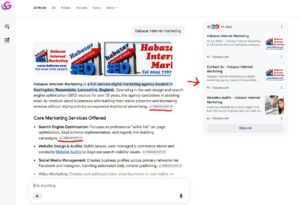
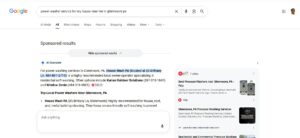
With Google’s AI Overviews, powered by Gemini, your Google Business Profile data is now directly utilised to address local queries. For instance, when a user asks Gemini for “the best HVAC company near me” or “Italian restaurant in downtown Boston,” the AI retrieves structured business information—such as hours, services, ratings, and location—from the same Business Profile that influences your local pack visibility. The local pack and AI responses have converged; they rely on the same foundational data.
This integration is crucial as AI Overviews are capturing an increasing share of local search traffic. A report by Search Engine Land in January 2026 indicated that achieving visibility in AI local search is now up to 30 times more challenging than traditional Google rankings. The report also highlighted that cannabis dispensaries that previously ranked well on conventional Google Search found themselves disappearing in ChatGPT and Gemini—not due to poor web content, but because their GBP data was not optimised for AI citations.
Your GBP now serves as a critical link between traditional local SEO and the AI answer layer. Maintaining a robust presence in the local pack ensures that your data feeds into the AI. Neglecting optimisation may render you invisible to over 60% of searches that resolve without a click.
How Your Google Business Profile Data Powers Gemini AI Responses
The integration with Google’s Gemini app functions in two significant ways. Firstly, it extracts GBP data to respond to user inquiries about local businesses. Secondly, it enables business owners to analyse their own GBP data using natural language—allowing queries about visibility, customer engagement trends, review sentiment, and search performance across various locations.
From an SEO standpoint, the key implication is that your profile data now directly contributes to the generation of AI answers.
Key Data Fields Used by Gemini for Local Responses
- Business categories and service descriptions. This structured data clearly defines your offerings.
- Reviews and sentiment summaries. Google’s AI extracts themes from reviews into visible highlights.
- Q&A content. This includes AI-generated responses to frequently asked questions.
- Photos and video content. Engagement metrics on visual content enhance AI confidence signals.
- Operating hours and real-time availability. This information is vital for queries with immediate intent.
- Location and proximity signals. While distance remains a key factor, AI also considers behavioural proximity data.
The December 2025 GBP update introduced AI-generated Q&A features, where Google’s models automatically create responses to frequently asked questions based on your reviews and business data. These AI-generated answers now appear directly in Gemini responses. If your profile fields are incomplete or inconsistent, the AI will generate answers based on that incomplete data, potentially misrepresenting your business.
Shifting Focus: Becoming the Answer Rather Than Merely Achieving High Rankings
This conceptual shift is redefining the local SEO landscape in 2026. Traditional SEO focused on securing a high ranking position—first page, top three, and inclusion in the local pack. Generative Engine Optimisation (GEO) now prioritises citation—ensuring your data is included in AI-generated answers.
These represent distinct optimisation objectives, requiring varied strategies.
A business may secure the top position in the local pack yet fail to appear in AI Overviews if its GBP data lacks structured completeness. Conversely, a business with comprehensive, well-structured GBP data can feature in AI answers even for queries where its traditional ranking would not place it among the top results.
The Digital Applied Local SEO 2026 Guide highlights the “AI Overview Integration” principle: GBP data now directly contributes to Gemini-powered AI Overviews, making structured profile information essential for local visibility. The guide indicates that Google’s local algorithm has shifted away from favouring brand authority and backlinks, now prioritising genuine engagement signals—such as photo views, review interactions, Q&A engagements, and direct user actions.
Your New Optimisation Checklist Should Include:
- – Complete structure for every GBP field.
- – Accuracy and consistency of AI-generated Q&A.
- – Engagement with visual content (photos and video posts).
- – Quality and recency of review responses.
- – Real-time data accuracy (operating hours, services, pricing).
Five Essential Steps to Establish Authority in AI Responses
 In light of this new paradigm, here’s a practical plan for local SEO professionals and business owners.
Step 1: Complete All Fields in Your Google Business Profile
The AI relies on structured data to generate answers. Each unfilled field represents a gap in your data source. Conduct a meticulous audit of your profile against Google’s available attributes and ensure you complete every relevant field—services, products, attributes, and descriptions. Incomplete profiles lead to incomplete AI answers.
Step 2: Perform Weekly Audits of AI-Generated Q&A
Since December 2025, Google has been auto-generating Q&A responses based on your reviews and business data, which appear in Gemini responses. Review your Q&A section at least weekly. Approve accurate responses, amend misleading ones, and remove anything that contradicts your current offerings. An AI-generated answer that misrepresents your business will be displayed to every user who inquires.
Step 3: Prioritise Engagement with Visual Content
Photos and videos have evolved beyond mere aesthetic elements in 2026. Google monitors engagement metrics—such as views, saves, and interactions—and utilises these as indicators of popularity in both local pack rankings and AI answer confidence. Regularly post new photos, use GBP posts to highlight new products or services, and track which images generate the highest engagement.
Step 4: Increase Review Volume and Enhance Response Quality
Google’s AI synthesises themes from reviews into profile summaries visible in AI answers. A trend of reviews mentioning “quick service” or “friendly staff” can become an AI-generated highlight in your listing. Encourage consistent reviews, respond thoughtfully to all feedback (both positive and negative), and directly address recurring negative themes through service improvements.
Step 5: Monitor Performance Specifically Related to Gemini
With GBP now integrated into Gemini, keep track of how your business is represented in AI-generated answers. Utilise the new Gemini Business notebooks feature to analyse your profile data—query visibility patterns, search performance, and customer behaviour trends. Treat Gemini as a reporting tool alongside Google Maps and Google Business Profile Insights.
Understanding the Importance of Your Google Business Profile
The Gemini integration announced in June 2026 clearly demonstrates that Google has fully aligned its local search framework with its AI answer generation system. Your Google Business Profile is no longer just a local listing; it is now an essential AI data source.
Those who adapt and acknowledge that traditional ranking optimisation and AI answer optimisation are now interlinked will thrive in this new landscape. Comprehensive, accurate, and well-structured GBP data serves dual purposes—it secures local pack positions and nourishes the AI framework. Every completed field, every review addressed, and every photo shared not only enhances your traditional ranking.
It establishes your authority as the preferred source for Gemini and AI Overviews.
The Integration of the Google Business Profile Local Pack and AI Answers: A Unified Strategy
Subscribe to Our Mailing List for More SEO Insights
 |
|
|
|---|
References:
1. Search Engine Journal: “Google Is Adding Business Profile Tools To The Gemini App” (June 10, 2026)
2. Search Engine Land: “AI local visibility is up to 30x harder than ranking in Google” (January 2026)
3. Digital Applied: “Local SEO 2026: Google Business Profile AI Guide” (February 2026)
4. Google Business Profile: “Google Marketing Live 2026: Key Highlights & Product News” (May 2026)
5. Cannabis Industry Journal: “Dispensaries Are Winning on Google and Disappearing on ChatGPT” (May 2026)
6. Fuel Online: “Google Business Profile Optimization: 2026 Complete Local SEO Guide”
The Article Your Google Business Profile Is Now an AI Answer Engine was first published on https://marketing-tutor.com
The Article Google Business Profile as Your New AI Answer Engine Was Found On https://limitsofstrategy.com
The Article Google Business Profile: Your AI-Powered Answer Engine found first on https://electroquench.com